
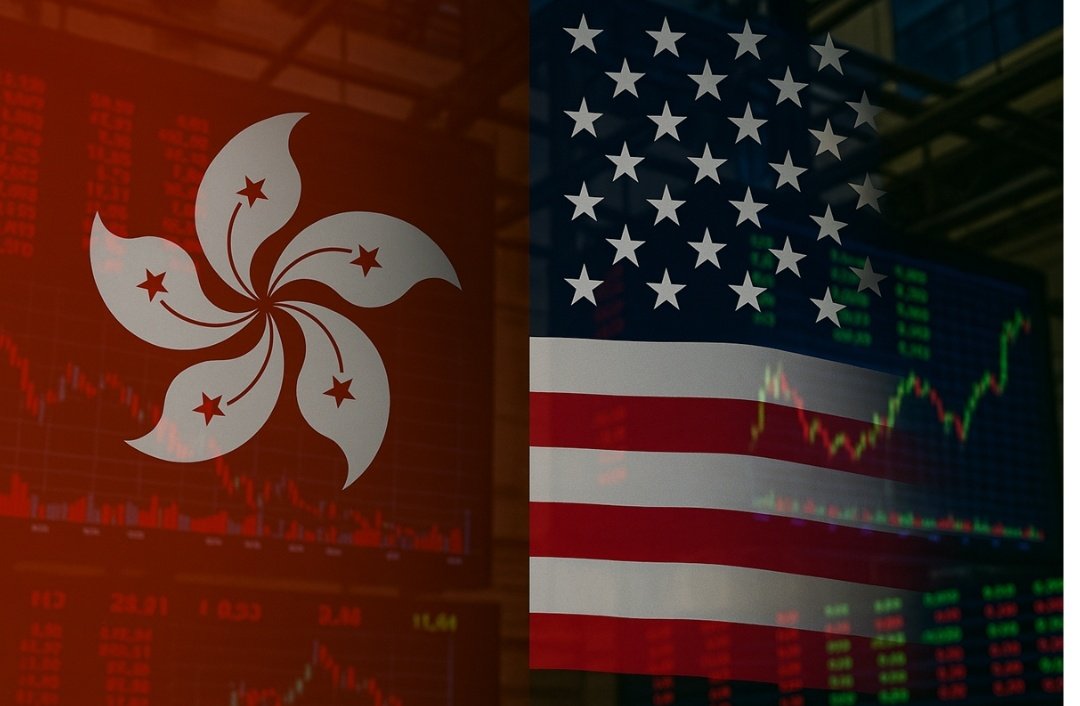
In recent years, the gap between the performance of Hong Kong’s Hang Seng Index and major U.S. technology indices has widened sharply. This article explores the economic, structural, and geopolitical reasons behind the underperformance, and what this divergence means for global investors.
A Tale of Two Markets: Diverging Momentum
The Hang Seng has long been a key financial barometer in Asia, representing Hong Kong’s economy and many of China’s biggest listed firms. Known formally as the HSI index, it includes major players such as HSBC, Tencent, and Alibaba. Yet while the U.S. Nasdaq and S&P 500 have surged to record highs, the Hang Seng has struggled to keep pace, even falling to decade lows in recent years.
American tech-heavy indices have benefited from innovation in artificial intelligence, strong earnings, and robust domestic demand. In contrast, the Hang Seng has been held back by China’s slowing economy, tighter regulations, and concerns about Hong Kong’s political climate. What was once viewed as a bridge between East and West now mirrors China’s broader economic challenges.
China’s Economic Slowdown and Its Ripple Effects
China’s cooling economy is central to the Hang Seng’s difficulties. The property crisis, weak consumer confidence, and shrinking exports have all cut into corporate profits. Many Hang Seng firms depend heavily on mainland China, so slower growth directly affects their bottom line.
Meanwhile, American tech companies such as Apple, Microsoft, and Nvidia continue expanding globally, balancing risks across markets. This global diversification has protected U.S. indices from domestic slowdowns, while Hong Kong-listed Chinese firms remain vulnerable to shifts in government policy and consumer sentiment.
The Tech Factor: Regulation and Investor Confidence
China’s regulatory crackdowns on tech, education, and property have been another major drag. The government’s push for tighter control over data, online platforms, and gaming has created unpredictability, discouraging investors.
In the U.S., regulation is more transparent and stable, allowing companies like Apple, Amazon, and Meta to innovate freely. These firms are seen as long-term growth engines, while Chinese tech leaders are still recovering from years of scrutiny that wiped out significant market value. The result is a confidence gap: U.S. investors see future growth, while Hong Kong investors see risk and restriction.
Geopolitical Tensions and Capital Flight
Tense U.S.-China relations have also reduced foreign inflows into Hong Kong equities. Sanctions, export controls, and political uncertainty have made global funds cautious. Many investors now prefer markets such as India or Singapore, viewing them as more stable entry points into Asia.
At the same time, a stronger U.S. dollar and higher American interest rates have made U.S. assets more attractive. This has led to capital outflows from Hong Kong, further pressuring the Hang Seng, which relies on liquidity from global institutions.
Currency, Interest Rates, and Policy Divergence
Monetary policy differences have amplified the divide. The U.S. Federal Reserve’s aggressive rate hikes since 2022 have strengthened the dollar, while Hong Kong’s currency peg limits its flexibility. Although Hong Kong tracks U.S. rate changes, China’s central bank has taken the opposite route by cutting rates to support growth. This policy mismatch discourages foreign investment in Hong Kong.
A strong dollar also shifts global portfolios toward U.S. markets. Combined with concerns about deflation and property defaults in China, many investors see more predictable returns in American tech stocks than in Asian equities.
Market Composition and Innovation Gaps
Another issue lies in market structure. U.S. indices are dominated by high-growth, innovation-led firms, while the Hang Seng leans heavily on banks, utilities, and property developers. Although companies like Tencent and Meituan bring a tech flavour, their potential is limited by regulation and slower domestic growth.
The U.S. also benefits from a thriving startup culture and deep venture capital funding. New tech companies frequently refresh the Nasdaq and S&P 500, creating a constant cycle of innovation. Hong Kong has tried to attract more tech listings, but sentiment remains subdued, and many firms now choose to debut in Shanghai or New York instead.
What Could Reverse the Trend?
There are still reasons for optimism. If China stabilises its property market and boosts consumer spending, corporate earnings could recover. Policy support for innovation and green energy may also help reposition Hong Kong as a growth hub.
Improved U.S.-China relations would encourage cross-border capital flows and reduce political risk. For long-term investors, the Hang Seng’s current valuations may even offer opportunity. Many quality companies trade at low multiples compared to their U.S. counterparts, appealing to contrarian investors seeking discounted exposure to China’s recovery.
Conclusion
The Hang Seng’s underperformance compared to U.S. tech indices stems from a mix of economic slowdown, regulation, geopolitics, and structural imbalance. While the HSI index remains an important Asian benchmark, it currently reflects the uncertainty surrounding China’s growth story. Until confidence returns and reforms inspire renewed investment, the gap between Hong Kong and Wall Street is likely to persist, symbolising two distinct financial worlds moving in opposite directions.